
Orbitthe platform by MAXQlabs
Do you really know what’s inside your software landscape?
Orbit reads your code and writes down what your systems really do. A living map of every application, with evidence to the line, on your own AI keys.
- < 1 weekfor an analysis that used to take months
- file:lineevidence behind every claim
- never stalerebuilt at every release
02The black box
Most organisations run on software nobody fully understands anymore.
The people who built it moved on. The documentation went stale the day after go-live. What remains is the code, the only place where the truth still lives.

- 01
Knowledge in a few heads
The people who understand the core are close to retirement. Onboarding takes years.
- 02
Documentation out of date
What exists describes an earlier version of the system, or a different one.
- 03
Dependencies unknown
Which programs touch which data, which jobs feed which reports: nobody has the full map.
- 04
Every change is a risk
Maintenance, compliance and modernisation decisions wait for an analysis nobody can finish.
COBOL is one example. Ten-year-old Java, .NET and data platforms have exactly the same problem.
03What it costs
Every decision waits for an analysis that takes months.
Every modernisation, migration or compliance question starts with an analysis phase nobody wants to pay for. So decisions get postponed, or taken blind: the migration that never starts, the audit that runs on assumptions.
Four forces make that blind spot expensive now.
- 01
Knowledge is retiring
The people who know why the system behaves as it does are leaving. The rules stay buried in the code.
- 02
Regulation wants proof
DORA, NIS2 and the AI Act ask for a current, provable map of systems, data and suppliers.
- 03
AI agents need ground truth
An agent can only act safely on an organisation it can describe. Most organisations cannot describe themselves.
- 04
Europe wants its own stack
Boards and governments are rethinking their dependency on platforms outside Europe.

09Faster, and better
The same method every time gives a more consistent and more complete result than manual work.
Traditional manual assessment
- Months of interviews and reading by scarce experts
- Quality depends on who looks, and where
- Out of date the day it is delivered
- Rarely repeated, because it costs too much
AI-first, with Orbit
- Days to weeks, on the code itself, with the same method for every application
- Every finding with evidence to the line
- Rebuilt at every re-ingestion, never stale
- Repeatable: a foundation that stays current after the first report
You stop buying effort. You start buying a result with predictable quality.
10Built for legacy
Including the code nobody wants to touch.
Orbit reads modern stacks and mainframe estates alike. On a COBOL environment, programs, copybooks, JCL and data definitions become an AS-IS per program, on your own infrastructure.
- COBOL
- JCL & copybooks
- SAS
- Java
- .NET
- SQL & data platforms
- AS-IS
Per program, in plain language
Business logic, inputs and outputs, with evidence to the line.
- MAP
Dependencies and flows
Call graphs, data lineage and batch chains: the map nobody had.
- FINDINGS
Risks you can point at
Dead code, risks and undocumented rules, each traceable to file and line.
11From insight to action
One foundation. Three moves.
Insight is only useful if it leads somewhere. The same AS-IS carries all three moves, with no new ingestion in between. And where there is nothing to analyse yet, Orbit builds new software straight from intent: spec, tests and code. Nothing merges without green tests and a person signing off.
- 01
Analyse
An AS-IS of the whole landscape: what runs, what it does, what depends on what.
- 02
Evolve
AI-assisted maintenance on that foundation. Every change starts from what the system really does.
- 03
Migrate
The AS-IS as your migration base: you know what can go, and what must come along.

One landing, then growth
- ↑ UpFrom one application to landscape insights and management views.
- ↓ DeepInto the AI-assisted lifecycle, per unit that keeps changing.
- → AcrossThe next technology, on the same platform.
Compliance (NIS2, GDPR, DORA) runs across all of it, on the same data.
12Your data stays with you
Orbit runs on your keys and your infrastructure.
-
Bring your own key
AI consumption runs through your own model provider, on your own keys.
-
The code never leaves the house
Orbit runs in your environment, in the EU. Your code is never used to train models.
-
Your identity provider
Single sign-on through the directory you already run.
-
Every step on the record
The agents commit every step they take: dated, reviewable and reversible.
-
Code, not data
Orbit works from code and specifications. Customer and production data are never an input, so no personal data goes to the AI.
-
Yours to take, no lock-in
What Orbit delivers, the analysis and the code, belongs to you. Plain production code, with no AI running inside your applications.
- Built to EU AI Act, GDPR and ISO 27001 standards
13Next · Orbit Landscape
From one application to the whole estate.
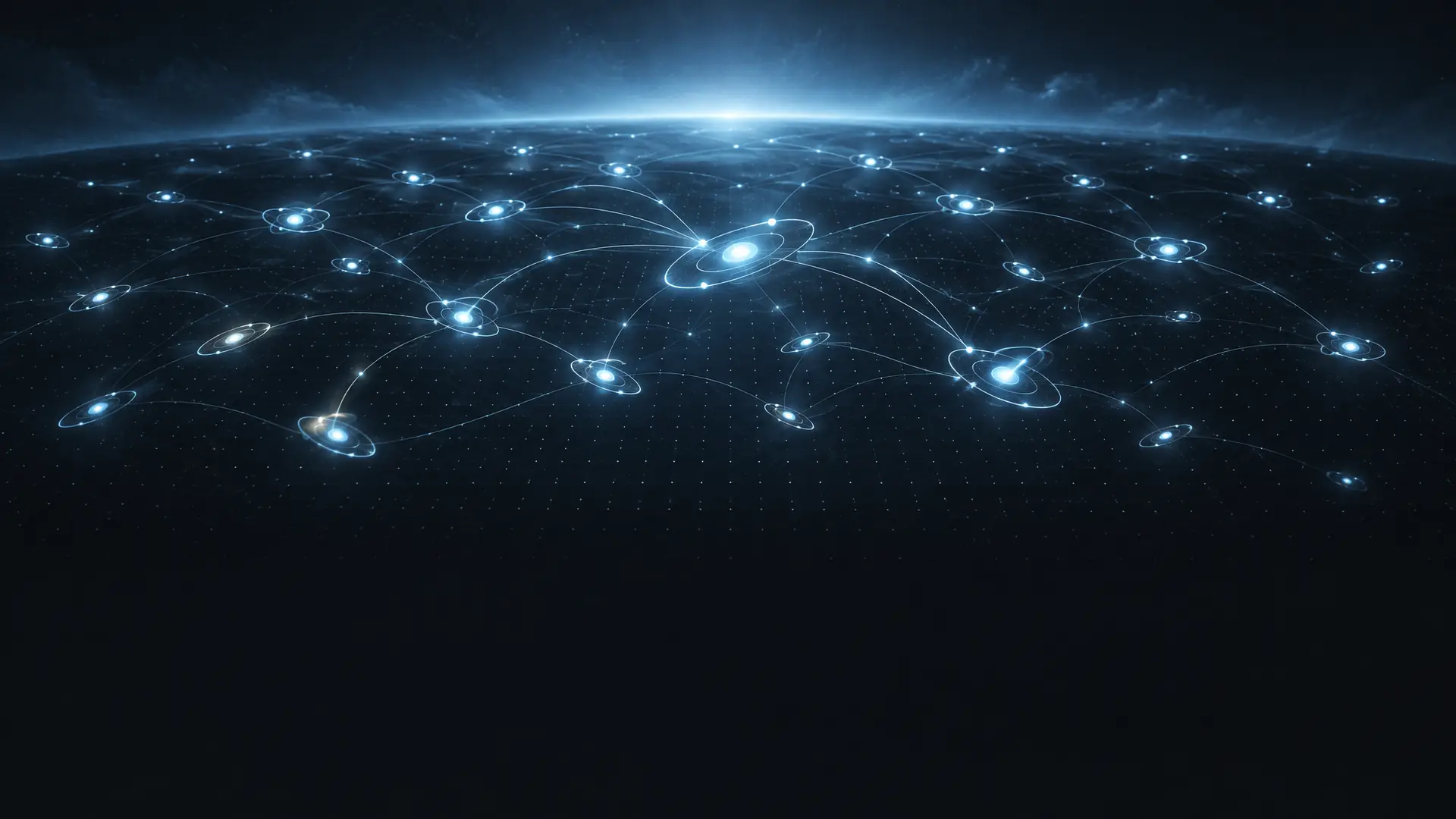
Organisations don’t run one application. They run hundreds. Orbit Landscape joins them into one living map, observed from the systems themselves.
Landscape tools today
Declared
Fact sheets filled in through surveys and workshops. Out of date the day after.
Orbit Landscape
Observed
Systems, links and data flows read from the code itself, with evidence, refreshed at every release.
Change one system. See who feels it.
Every link knows how critical it is and what happens when the far end fails. So an impact analysis tells you what stops, what slows down and what merely notices.
Pick a system to change
Illustration on a fictional estate.
A change to ERP reaches 7 of the 9 other systems: WMS stops; Webshop, Finance and Payroll are delayed; Customer portal and Reporting degrade; the Data platform notices.
-
Systems and typed links
Every dependency and integration becomes a link, with its criticality and failure mode.
-
Impact across systems
Change one component and see which systems, capabilities and processes feel it.
-
Questions that stay answered
Ask once, in plain language. Every refresh stores a dated answer you can cite, and compare with last quarter.
-
Works with what you have
Feeds the enterprise-architecture tools you already use, with evidence instead of surveys.
One map, four obligations.
Regulators already ask for this map. Today it is assembled by hand, once a year. The landscape keeps it current, with evidence.
- DORARegister of information: every ICT service mapped to the business functions it supports.
- NIS2Asset management: a current inventory of systems and their dependencies.
- GDPRRecords of processing: which personal data lives where, per store and per flow.
- EU AI ActInventory: where automated decisions run, and what data they use.
15Later · Orbit Ontology
A working model of the business, read from the systems themselves.
An ontology holds the objects your business talks about, the links between them, and the actions people and AI agents may safely take. Orbit already maps where each object really lives. The next step lifts that map to the language of the business.
Business objects
Mapped by Orbit
CUST_MASTERTBL_POLCYCLM_MAINAI answers better when it reasons over structure.
More than three times better, from structure alone. The ontology is what makes AI safe to act on.
Sequeda et al., data.world benchmark, 2023 (arXiv 2311.07509).
Derived from what already runs.
Ontologies are usually modelled by hand, in weeks of workshops, and start ageing the day they are finished. Orbit starts from the other end: the landscape graph already knows which systems hold the customer, where the claim table is and which code changes it. It proposes the ontology; people approve it. European, and on your own keys.
Insurance
Policy · Claim · Customer
Trace a claim end to end. Show regulators where pricing rules live.
Public sector
Citizen · Case · Benefit
Once-only data across agencies. See which code implements which article of law.
Retail
Product · Price · Order
One price truth across ERP, tills and web shop. Order agents that act in the systems themselves.
Manufacturing
Order · Batch · Asset
Trace a quality incident to the code and configuration behind it.

17Your landscape scan
Do you really know what’s inside your software landscape? Let’s find out, on your own code.
One technology. Your code, your keys. The first AS-IS within the week.